Infrastructure As Code: Managing Servers In The Cloud Pdf Download
2nd edition out now!
The 2d edition of Infrastructure as Code is out! Mostly. E-Books are bachelor at present ([Amazon.com] [Amazon.co.united kingdom of great britain and northern ireland] [Amazon.in] [O'Reilly]), while the dead-tree version is trundling across rails, roads, and body of water lanes towards your local bookshop. I'm told to wait it out in January 2021.
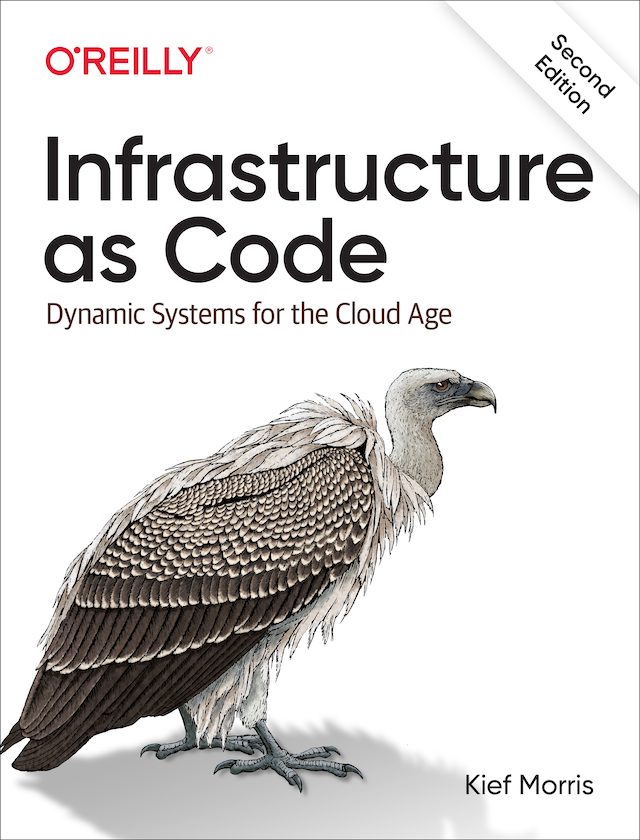
The benefits of infrastructure as code don't come up from the tools themselves. They come from how you use them. The fob is to leverage the technology to embed quality, reliability, and compliance into the procedure of making changes.
I wrote the first edition of this volume because I didn't see a cohesive collection of guidance on how to manage infrastructure as code. At that place was plenty of advice scattered across blog posts, conference talks, and documentation for products and projects. But you lot needed to sift through everything and piece a strategy together for yourself, and most people didn't have the time.
Things accept moved along since the showtime edition came out in June 2016. That edition was subtitled "managing servers in the cloud," which reflected that virtually infrastructure automation until that point focused on configuring servers. Since and so, containers and clusters have become a much bigger bargain, and the infrastructure action has moved to managing collections of infrastructure resources provisioned from cloud platforms, what I (and many others) call _stacks_.
Then the new edition talks a lot more about edifice stacks, the remit of tools like CloudFormation, Terraform, and Pulumi.
I've changed quite a bit based on what I've learned about the evolving challenges and needs of teams building infrastructure. Every bit I've already touched on, I see making information technology safety and like shooting fish in a barrel to change infrastructure as the key benefit of infrastructure equally code. I believe people underestimate the importance of this, thinking that infrastructure is something you build and forget.
But too many teams I meet struggle to meet the needs of their organizations, not able to expand and scale quickly enough, support the pace of software delivery, or provide the reliability and security expected. And when we dig into the details of their challenges, it's that they are overwhelmed by the need to update, set, and better their systems. Then I've doubled down on optimizing for change as the core theme of the second edition.
The new edition introduces three core practices for using Infrastructure as Code to make changes safely and easily. _Define everything as code_ is obvious from the name, and creates repeatability and consistency. _Continuously integrating, testing, and delivering_ each modify enhances safe. It also makes information technology possible to move faster and with conviction. _Small, independent pieces_ are easier and safer to change than larger pieces.
These three practices are mutually reinforcing. Code is easy to track, version, deliver across stages of a change direction procedure. Information technology's easier to continuously test smaller pieces. Continuously testing each piece on its own forces you to keep a loosely coupled blueprint.
These practices and the details of how to do them are familiar from the earth of software development. I drew on agile software applied science and delivery practices for the first edition of the book. For the new edition I've also drawn on rules and practices for effective design.
In the past few years I've seen teams struggle with larger and more complicated infrastructure systems, and seen the benefits of applying lessons learned in software pattern patterns and principles. So I've included several capacity on how to do this.
I've also seen that organizing and working with infrastructure lawmaking is difficult for many teams, and so I've addressed various pain points I've seen. How to continue codebases well organized, provide development and exam instances for infrastructure, and manage collaboration of multiple people, including those responsible for governance.
DOWNLOAD HERE
Posted by: laynesume1971.blogspot.com


0 Komentar
Post a Comment